My Letter to All the “Confused” Parents Out There
There is a particular kind of guilt that comes with being the parent of an estranged child, especially when the signs were there long before the relationship ever broke. People warned you. They told you that your controlling nature, narcissistic tendencies, overbearing spirit, and harsh words would eventually push your children away. They tried to tell you that love without gentleness becomes fear, authority without understanding becomes resentment, and a parent who demands respect without offering emotional safety may one day find themselves standing on the outside of the very family they spent years trying to control. But you dismissed the warnings. You boasted that children need their parents, that they would come around eventually, and that no matter what happened, they would always come back because you were their mother or father. Perhaps you genuinely believed that title alone would guarantee you a lifetime of access to their lives. You believed that being a parent meant your place was permanent, regardless of how you treated the people entrusted to your care.
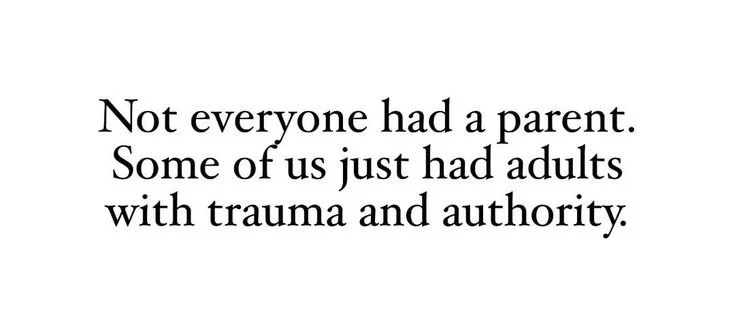
Now, you are left confronting a reality you never imagined. The phone rings, but not because your children are calling. The holidays arrive, and your house is no longer where they want to be. The hugs, the laughter, the casual conversations, and the warmth you once took for granted have become memories of a relationship that no longer exists in the same way—if it ever existed in the first place. And yet, somehow, their names remain on your mind. You wonder what they are doing, who they have become, how their marriage is, where they’ll venture to next, what they think of you, and why they seem perfectly capable of living without you. You may even find yourself obsessing over their personalities, their decisions, their boundaries, and the lives they have built without your involvement. You might criticize their distance, question their character, or convince yourself that someone must have turned them against you—like their last boyfriend, or their wife, or their best friend. Anything, perhaps, to avoid sitting with the possibility that the very people you expected to remain attached to you for life have finally found the courage to detach. And perhaps what eats at you most is not simply their absence, but the possibility that they are finally experiencing the peace they spent years trying to find while they were still under your influence.
Because sometimes, the estranged child is no longer fighting for your attention, approval, or affection. They are no longer rehearsing conversations in their head, hoping that this time you will listen. They are no longer waiting for an apology, begging to be understood, or trying to convince you that their feelings matter, too. They have simply stopped asking for what you were never willing to give. And that is a reality that can be difficult for a parent to accept, particularly one who spent years believing that a child's need for parental love would always outweigh the pain of being mistreated. But children grow up. They develop boundaries. They begin to understand that sharing DNA does not obligate them to tolerate disrespect, manipulation, or emotional turmoil for the rest of their lives.
They learn that they can love someone from a distance, grieve the parent they needed but never truly had, and build a life in which their peace no longer depends on earning your approval. When that realization finally settles in, you are left with a choice: confront the person you have been, or spend the rest of your life resenting the children who finally chose themselves. Because you were warned that one day your actions would have consequences. You simply never believed those consequences would look like your own children no longer wanting to come home.
There is something deeply unsettling about watching guilt eat a person alive. Sometimes, the people who live rent-free in your mind aren’t there because you miss them, love them, or even want them back. Sometimes, they are there because they are a walking reminder of the dysfunctional parent you were when you hurt them. And instead of confronting that version of yourself, you turn the child that you wronged into the problem. You rewrite the story, justify your actions, minimize the damage, and convince yourself that your child somehow deserved what happened. Anything to avoid sitting with the uncomfortable truth that, as a parent, you should have handled things differently.
And that is where the real misery begins.
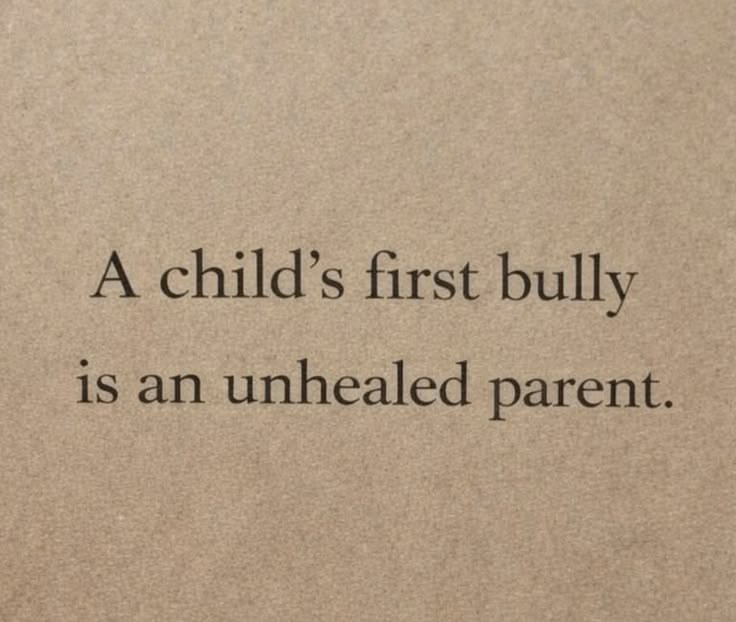
Imagine being so unhealed that you cannot allow someone to exist peacefully outside of your life because their existence reminds you of what you did. Imagine being so consumed by your own guilt that someone else's healing feels like an attack on your character. They have moved on, found their peace, and perhaps no longer give you a second thought, yet you are still mentally arguing with them, defending yourself against conversations they aren't even having with you, and fighting a version of the story that only exists in your head.
That is what happens when guilt goes unprocessed: it turns into resentment, projection, and an exhausting need to control a narrative you no longer have the right to dictate. How miserable must it be to carry that kind of internal conflict? To be so unwilling to forgive yourself that you make someone else's existence your personal battleground? To confuse accountability with humiliation and someone else's boundaries with betrayal? Sometimes, you are not haunted by the person you hurt. You are haunted by the person you discovered yourself to be when you hurt them. Good parents aren’t the ones getting cut off by their adult parents.
And until you are willing to confront that person honestly, no amount of distraction, deflection, blame, or revisionist history will give you the peace you are looking for. The irony is that the person you wronged may have already accepted what happened. They may have processed their pain, learned their lesson, and decided that whatever you brought into their life is no longer something they need to carry. Meanwhile, you are still holding court in your own mind, trying to prove your innocence to someone who may not even be seeking justice from you anymore.
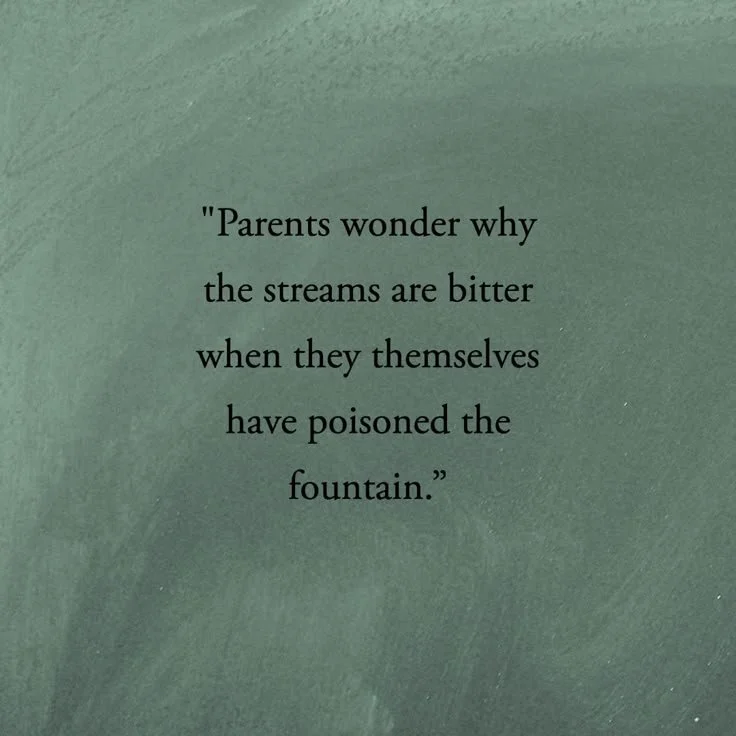
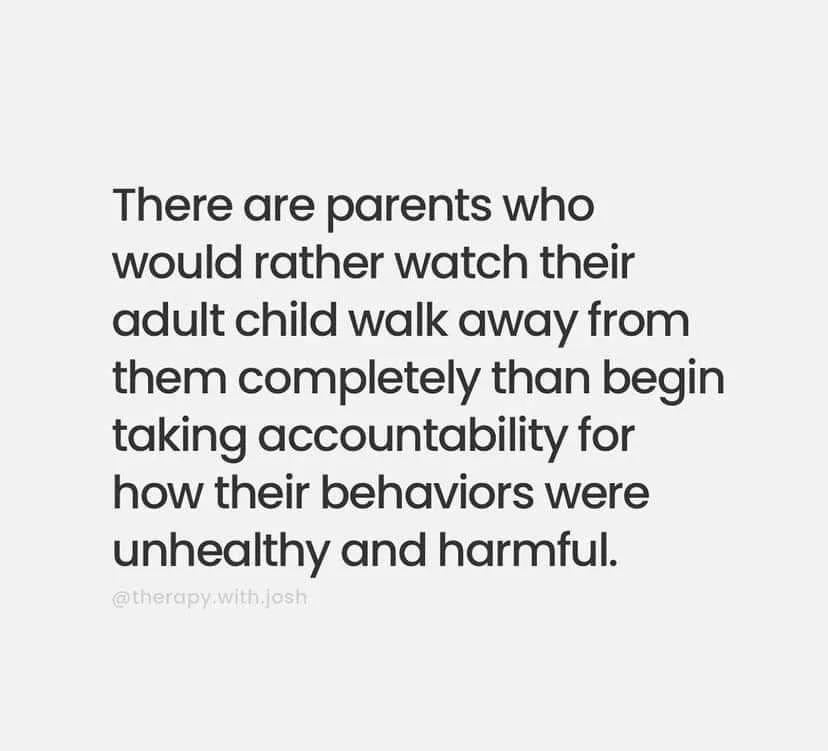
And let's talk about the parents who view their estranged child's children as their second chance, their golden ticket back into a family they helped fracture. Suddenly, they want to play the doting grandparent, conveniently forgetting that the child who gave them that title is the very person whose boundaries they refuse to respect. Grandchildren are not loopholes, emotional bargaining chips, or little bridges you get to cross just because the front door to your adult child's life is closed. But that's a blog post for another time.
There is something profoundly sad about that. And, honestly, something pathetic about choosing pride over growth when the only person your refusal to heal continues to punish is yourself. At some point, healing requires you to stop asking, "Why can't they see me differently?" and start asking, "Why am I so afraid to see myself clearly?"
And perhaps the most humbling part of all is realizing that you are not entitled to a starring role in someone's life simply because you played a significant role in their pain. They do not owe you reconciliation. They do not owe you access. They do not owe you a softened version of the truth just so you can live more comfortably with yourself. Sometimes, the consequence is simply that someone who once cared about you now knows better than to let you close enough to hurt them again.
Your daughter is not what is wrong with you; you are what is wrong with you. Your son choosing his own family, happiness, and emotional well-being over reconciling with a parent who refuses to acknowledge the harm they have caused is not a crime. It is not betrayal. It is not disrespect simply because you do not agree with his decision. And it certainly is not proof that they have forgotten where they came from. Sometimes, it is proof that she finally understands where she can no longer afford to remain. You cannot spend years making your child feel small and then grow offended when they build a life where they can stand tall. You cannot spend their childhood dismissing their feelings, criticizing their personality, controlling their decisions, and making love feel conditional, only to become confused when they grow into adults who no longer invite you into the most intimate parts of their lives. You cannot teach a child that their voice does not matter and then demand to be heard when they finally find theirs. You cannot spend years treating their boundaries like acts of rebellion and then wonder why they no longer feel safe enough to be vulnerable with you. You cannot make a home feel like a battlefield and then become offended when your children grow up and stop coming home.
Parenthood is not a lifetime membership that guarantees you unlimited access to another human being. It is a responsibility, a calling to nurture, love, guide, and accept a child as they grow into their own person. Your job is not to raise someone who remains permanently dependent on you, agrees with everything you say, or sacrifices their happiness to protect your ego. Your job is to raise someone who feels secure enough to leave your home without feeling as though they are abandoning you, who can make decisions without fearing your punishment, and who knows that disagreement will never cost them your love. You spend those first eighteen years laying the foundation for the relationship you hope to have with your child in adulthood. You are teaching them, through everyday interactions, whether your presence will feel like a safe harbor or an approaching storm. Every apology you refuse to give, every boundary you punish, every harsh word you dismiss as "just being honest," and every moment you prioritize being right over understanding your child adds another brick to the wall that may eventually separate you. And then, when that wall becomes too high to climb, you stand on your side wondering why they built it in the first place
Your problem is, you didn’t fix the broken child within you before having a child yourself. You’ll come to see a lot of unhealed parents had children just to have someone to control and love them unconditionally. Let the estranged relationship you have with your child be a lesson, not a lifelong war. Because there is nothing more exhausting than being at war with someone who has already made peace with never dealing with you again. The ultimate goal of parenthood was never to raise children who could not live without you. It was to love them so well that, even when they no longer needed you, they would still have a reason to choose you. So if your child has stopped “choosing you”, look in the mirror. Karma’s a bitch—ain’t it.
Sincerely,
Sassy Ashley